


 PLATFORM UPDATE:


Upcycling walnut (Juglans regia L.) by-products: characterisation of nutritionally relevant bioactive compounds

Abstract
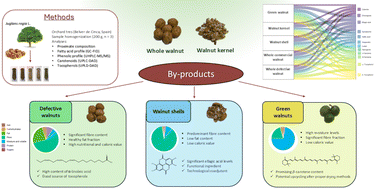
Walnuts (Juglans regia L.) are attracting increasing interest from consumers, industries, and the healthcare community due to their high content of bioactive compounds, including (poly)phenols, carotenoids, tocopherols, and omega-3 fatty acids. Despite the continued growth in global walnut production, the effective valorisation of walnut processing by-products remains a challenge. While most research has focused on the edible kernel, emerging evidence suggests that underutilised walnut fractions may also represent valuable sources of compounds with antioxidant and anti-inflammatory properties. This study aimed to characterise the bioactive compound profiles of green walnuts, defective walnuts, and walnut shells in comparison with commercial whole walnuts and kernels. Samples collected from an orchard located in Huesca (Spain) were homogenized and analysed in triplicate. Proximate composition was determined using official methods, the fatty acid profile was determined by GC-FID, the phenolic profile by UHPLC-ESI-MS/MS, and carotenoids and tocopherols by UPLC-DAD. Green walnuts contained exceptionally high concentrations of carotenoids, especially β-carotene (629.7 ± 39.4 mg kg−1). Walnut shells were the richest source of phenolic compounds, notably ellagic acid (713.3 ± 7.6 mg kg−1) and catechin (71.9 ± 1.2 mg kg−1). Tocopherols were mainly concentrated in the kernel, dominated by γ-tocopherol (226.9 ± 8.1 mg kg−1), while defective walnuts showed a compositional profile similar to commercial walnuts. This comparative analysis highlights the significant potential of walnut processing by-products as sources of nutritionally relevant bioactive compounds. These findings support their valorisation as functional ingredients for agro-food and cosmetic applications within a circular economy framework.
- This article is part of the themed collection: FBHC 2025 - 5th International Conference on Food Bioactives & Health Special Collection
 Please wait while we load your content...


