


 PLATFORM UPDATE:

Alleviating effects of 2′-fucosyllactose combined with Bifidobacterium longum BB536 on loperamide-induced constipation and depressive-like behavior
 *acd
and
*acd
and
Abstract
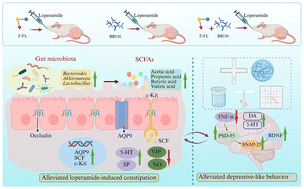
Constipation as a public health issue impairs human health and quality of life, while current strategies against constipation often lead to adverse effects. This study evaluated the effects and underlying mechanism of 2′-fucosyllactose (2′-FL) and Bifidobacterium longum BB536 (BB536) on relieving loperamide-induced constipation and depressive-like behavior. 2′-FL + BB536 can significantly elevate fecal water content, shorten defecation time and enhance the intestinal transit rate in constipated mice. 2′-FL + BB536 increased the contents of substance P and 5-hydroxytryptamine, while reducing the contents of nitric oxide and vasoactive intestinal peptide. 2′-FL + BB536 decreased histological damage of colonic and brain tissues in constipated mice. Furthermore, 2′-FL + BB536 upregulated the mRNA and protein expression levels of AQP9 and activated the SCF/c-Kit signaling pathway in the colon. Meanwhile, 2′-FL + BB536 reduced neuroinflammation and prevented synaptic damage through suppressing the mRNA and protein expressions of TNF-α and promoting the mRNA and protein expressions of SNAP-25 and PSD-95 in the brain, thereby alleviating depressive-like behavior. Notably, 2′-FL + BB536 regulated gut microbiota diversity and enhanced the relative abundance of several bacteria, including the phylum Bacteroidetes and the genera Lactobacillus and Akkermansia. The contents of short-chain fatty acids were upregulated following 2′-FL + BB536 supplementation. Overall, 2′-FL combined with BB536 exerted alleviating effects on loperamide-induced constipation and depressive-like behavior through regulating the gut–brain axis.
- This article is part of the themed collection: Food & Function HOT Articles 2026
 Please wait while we load your content...


