


 PLATFORM UPDATE:


Effect of Capsicum annuum leaf extract addition timing on yogurt bioactivity, digestibility, and cellular antioxidant defence
 *abcd
*abcd
Abstract
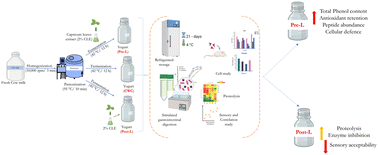
Capsicum leaves contain notable levels of bioactive compounds, making them a potential functional ingredient for fermented dairy systems. During fermentation, microbial activity can modify these compounds, suggesting that the timing of extract incorporation may influence product quality. In this study, yogurt was supplemented with capsicum leaf extract (CLE) either before fermentation (Pre-L) or after fermentation (Post-L) to compare the effects of microbial exposure on physicochemical properties, bioactive activities, digestibility, and cellular antioxidant responses. CLE moderated acidification, with Pre-L maintaining a higher pH during fermentation. LAB viability was above 8 log CFU g−1 throughout storage in all samples. CLE supplementation increased phenolic content and antioxidant activity, with Pre-L showing superior retention during storage. In contrast, Post-L preserved enzyme-inhibitory activity more effectively, with smaller losses in α-amylase and α-glucosidase inhibition compared to Pre-L. During in vitro digestion, CLE enhanced phenolic bioaccessibility and proteolysis. Peptidomic analysis revealed approximately two-fold higher soluble peptide abundance in Pre-L, while Post-L showed the greatest hydrolysis during intestinal digestion, confirming timing-dependent modulation of proteolysis. In RAW 264.7 macrophages, CLE-supplemented yogurts reduced H2O2-induced oxidative stress and preserved antioxidant defence, with Pre-L showing the strongest cytoprotection. Overall, the timing of incorporation offers distinct benefits. Pre-L enhances antioxidant retention and cellular protection, whereas Post-L improves protein digestibility.
 Please wait while we load your content...


