


 PLATFORM UPDATE:


Therapeutic effects of selenium-enriched rapeseed against triple-negative breast cancer: involvement of Resolvin D5 activation and IL-17 signaling inhibition
 *bd
*bd
Abstract
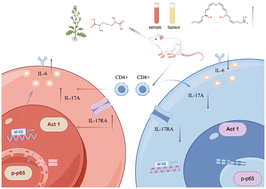
Triple-negative breast cancer (TNBC) presents a major therapeutic challenge due to its aggressive behavior and a microenvironment characterized by a dysregulated axis linking inflammation to tumor progression. As a selenium-biofortified edible vegetable, selenium-enriched rapeseed shoots (SeRS) are a promising dietary source of methylselenocysteine (MSC), highlighting their potential in “medicine-food homology” strategies. This study aimed to investigate the chemo-preventive efficacy of selenium-enriched SeRS as a dietary intervention in TNBC, building upon its previously documented anti-inflammatory and antioxidant properties, and to elucidate its underlying mechanism of action. We first demonstrated that SeRS aqueous extract significantly inhibited the migration and invasion of 4T1 TNBC cells in vitro. Subsequently, in a preventive dietary intervention study, administration of SeRS potently suppressed orthotopic tumor growth and metastasis in a 4T1 syngeneic mouse model. Concomitantly, SeRS treatment favorably remodeled the tumor immune microenvironment, as evidenced by increased infiltration of CD4+ and CD8+ T cells and a decrease in exhausted PD-1+/LAG-3+ T cell subsets. Integrated metabolomic and transcriptomic analyses identified resolvin D5 (RvD5), a specialized pro-resolving mediator, as a key endogenous metabolite upregulated by SeRS, and revealed the pro-inflammatory IL-17 signaling pathway as a potential target. Molecular docking confirmed high-affinity binding between RvD5 and IL-17A. Functionally, both SeRS and purified RvD5 suppressed IL-17 pathway activation, as evidenced by reduced phospho-p65 and downregulation of IL-17 receptor (IL-17RA) and ACT-1. Critically, rescue experiments established that RvD5 could reverse IL-17A-induced pro-tumorigenic effects. Our findings elucidate a coordinated mechanism in which SeRS, via upregulation of RvD5, suppresses the IL-17 signaling pathway—a key driver of chronic inflammation and immune dysfunction in TNBC—thereby exerting anti-TNBC effects. This work provides a scientific basis for developing selenium-enriched agricultural products into functional foods for cancer prevention through targeted nutritional modulation.
 Please wait while we load your content...


