


 PLATFORM UPDATE:


Epigallocatechin-3-gallate ameliorates LPS-induced ARDS by modulating Akkermansia-associated SCFAs metabolism and inhibiting the JAK2/STAT3 candidate signaling pathway
 *ac
*ac
Abstract
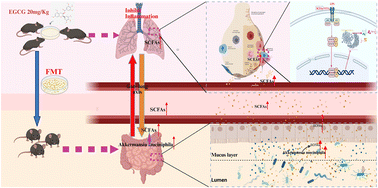
Acute respiratory distress syndrome (ARDS) is a leading cause of acute respiratory failure and mortality, characterized by significant inflammation and damage to the alveolar-capillary membrane, which disrupts gas exchange. Although the triggers of ARDS vary, uncontrolled inflammation plays a central role in its progression, with current treatment options being limited. Dysbiosis of the gut microbiota fuels systemic inflammation via the gut–lung axis and acts as a key driver of ARDS onset and progression. Epigallocatechin-3-gallate (EGCG), a major polyphenolic constituent derived from green tea, with known anti-inflammatory effects, and microbiota-modulating properties, holds potential as a therapeutic intervention for ARDS. This study investigated the mechanism of EGCG's intervention in ARDS and its impact on gut microbiota using C57BL/6J mice. The mice were divided into groups receiving different doses of EGCG pretreatment, followed by intratracheal instillation of lipopolysaccharide (LPS)-induced ARDS. Various techniques, including pathological examination, ELISA, and immunohistochemistry (IHC), were employed to assess pulmonary inflammation and examine intestinal tight junction integrity. Gut microbiota composition was analyzed via 16S rRNA sequencing. To further elucidate the role of the gut microbiota, fecal microbiota transplantation (FMT) was performed following gut microbiota depletion. Feces from EGCG-treated donor mice were transplanted into recipient mice, with results compared to the EGCG-pretreated group. A more focused investigation involved the transplantation of Akkermansia muciniphila (AKK), and its effects on pulmonary inflammation and intestinal tight-junction integrity were observed. Additionally, GC-MS analysis confirmed that AKK-derived metabolites were short-chain fatty acids (SCFAs), and the effects of SCFAs were compared to those of EGCG pretreatment. Network pharmacology and transcriptomic analysis suggested that SCFAs likely exert their effects through the JAK2/STAT3 signaling pathway. The effects of SCFAs and EGCG pretreatment were further validated using specific inhibitors to assess pulmonary and intestinal conditions. In the LPS-induced ARDS model, EGCG significantly reduced the inflammatory response, decreased inflammatory cell infiltration, and inhibited pro-inflammatory cytokine production, thereby limiting lung and intestinal tissue damage. Mechanistically, EGCG enriched the gut microbiota, particularly increasing AKK abundance, which promoted SCFAs production. These SCFAs entered systemic circulation, reached the lungs, and modulated the JAK2/STAT3 candidate signaling pathway to suppress inflammation, ultimately alleviating ARDS pathology. In conclusion, EGCG mitigates ARDS-related inflammatory damage by increasing Akkermansia muciniphila abundance and enhancing SCFAs production, which inhibits the JAK2/STAT3 candidate pathway. This study introduces a novel gut microbiota-based approach for ARDS treatment and offers new insights into the role of gut-derived metabolites in ARDS pathogenesis.
 Please wait while we load your content...


