


 PLATFORM UPDATE:


Anti-inflammatory effects of gallic acid on chronic bacterial prostatitis: involving target tissue distribution
 *a
*a
Abstract
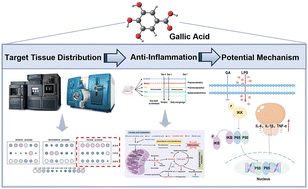
Gallic acid (GA), also known as 3,4,5-trihydroxybenzoic acid, is a polyphenolic bioactive component in pomegranates, grapes, tea leaves, and gallnuts. This study employed LC-MS/MS to systematically analyze the pharmacokinetic and tissue distribution of GA in rats. Our findings demonstrated that GA accumulated most prominently in kidney and prostate tissues. Based on these targeted distribution characteristics, chronic bacterial prostatitis (CBP) was chosen as a target tissue inflammatory model to explore the anti-inflammatory effects of GA. The results showed that GA exerted a direct anti-inflammatory effect by inhibiting the activation of the NF-κB inflammatory signaling pathway and reducing the release of pro-inflammatory cytokines such as IL-6, IL-1β, and TNF-α in both lipopolysaccharide (LPS)-induced RWPE-1 cell model and CBP rats. Untargeted prostate tissue metabolomics identified 43 metabolites in the prostate as metabolic markers associated with CBP rats. Additionally, mass spectrometry imaging (MSI) was used to visualize the heterogeneous distribution of these metabolites in prostate tissue and reveal the anti-inflammatory metabolic mechanism of GA, which was related to arginine metabolism, linoleic acid metabolism, and the downregulation of arachidonic acid metabolism. In conclusion, GA improves the physiological disorders associated with CBP by exerting anti-inflammatory effects and regulating metabolic homeostasis. These findings may shed new light on our understanding of the application value of natural polyphenols in food function and nutrition.
 Please wait while we load your content...


