


 PLATFORM UPDATE:


Next-generation liposomal coenzyme Q10: from formulation to clinical evidence via metazome technology for improved stability and enhanced oral absorption
 *ab
*ab
Abstract
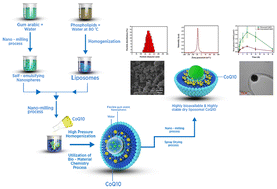
Coenzyme Q10 (CoQ10) is a mitochondrial electron carrier and antioxidant widely used in cardiovascular, neurodegenerative, and metabolic disorders; however, its oral efficacy is severely limited by extremely low aqueous solubility, high crystallinity, and poor bioavailability. Although several lipid-based and nanoformulations have been explored, many suffer from limited stability, incomplete suppression of crystallinity, or modest pharmacokinetic improvement. The objective of this study was to develop a stable, scalable liposomal CoQ10 formulation and to evaluate its physicochemical properties and human oral bioavailability. Metazomal CoQ10 (MCQ) was developed using Metazome technology, in which CoQ10 was incorporated into phospholipid bilayers reinforced with gum arabic nanospheres and converted into a dry, reconstitutable liposomal powder by spray drying. MCQ formed nanosized (∼185 nm), spherical vesicles with high encapsulation efficiency (88.6 ± 2.3%), favorable loading capacity (14.2 ± 0.8%), strong electrostatic stability (zeta potential −41.16 mV), and amorphous molecular dispersion of CoQ10. The formulation retained >90% of CoQ10 after 180 days at room temperature. In a randomized, open-label, crossover study in healthy volunteers, MCQ demonstrated significantly improved pharmacokinetics compared with conventional CoQ10 (CCQ), including a 4.3-fold increase in AUC0−t, a 3.6-fold increase in Cmax, prolonged Tmax, extended half-life, and a lower elimination rate constant (p < 0.01). The integrated Metazome-based architecture represents a key innovation by combining amorphization, nanoscale liposomal delivery, and structural stabilization, resulting in superior stability and markedly enhanced human bioavailability. MCQ therefore offers strong potential for nutraceutical and therapeutic applications requiring improved and sustained CoQ10 exposure.
 Please wait while we load your content...


