


 PLATFORM UPDATE:


The potential of natural dietary products in mitigating inflammation during pregnancy
 a
Abigail
García-Morales,
ab
Euclides
Avila,
a
Consuelo
Lomas-Soria,
ac
Andrea
Olmos-Ortiz
d
and
Lorenza
Díaz
*a
a
Abigail
García-Morales,
ab
Euclides
Avila,
a
Consuelo
Lomas-Soria,
ac
Andrea
Olmos-Ortiz
d
and
Lorenza
Díaz
*a
Abstract
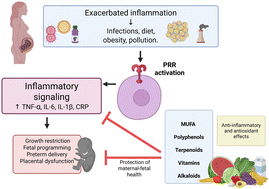
Exacerbated inflammation in pregnancy can be detrimental in many aspects and can result in spontaneous abortion, intrauterine growth restriction, or preterm delivery. The inflammatory cascade may be triggered by pathogen molecular motifs or by damage-associated molecular patterns. These danger signals can be found in viral or bacterial antigens, tissue breakdown products, excess adipose tissue, and pollutants, among others. Endogenous danger signals can also be released after exposure to nutrient overload. Mechanistically, both pathogen- and damage-associated molecular patterns are recognized by pattern recognition receptors on host cells, triggering signalling pathways that culminate in immune activation. The resultant inflammation can alter homeostasis at the feto-maternal interface, posing a risk to the continuation of pregnancy and imprinting fetal developmental pathways. A maternal healthy diet can help prevent and mitigate inflammation. The adequate selection of foods is of utmost importance especially during pregnancy, which involves choosing natural products while avoiding ultra-processed foods, saturated fats, and refined carbohydrates. Plant-based diets, particularly those rich in whole grains, fruits and vegetables, are especially important since they contain numerous bioactive compounds with anti-inflammatory and anti-oxidant properties. In this review, we explore the potential of natural dietary products to elicit anti-inflammatory effects during pregnancy, with a particular focus on key dietary constituents such as monounsaturated fatty acids, phytochemicals (such as polyphenols, terpenoids, and alkaloids), and vitamins. The aim was to provide an up-to-date narrative review integrating the impact of these compounds upon immunological, metabolic, placental, and fetal responses, emphasizing the anti-inflammatory potential of natural dietary products in the context of maternal health.
- This article is part of the themed collection: Food & Function Review Articles 2026
 Please wait while we load your content...


