


 PLATFORM UPDATE:


Resveratrol attenuates high-fat diet-induced testicular injury via the NRF2/GPX4 pathway: an integrated metabolomics and network pharmacology study
 *a
and
*a
and
Abstract
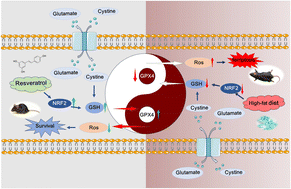
High-fat diet (HFD) consumption is a risk factor for multiple metabolic disorders, including male reproductive dysfunction. Resveratrol (Res), a natural polyphenolic compound derived from grapes and peanuts, has been shown to improve testicular injury. However, the protective mechanism against HFD-induced testicular injury has not been fully elucidated. This study aimed to elucidate the protective effects and underlying mechanisms of Res against HFD-induced testicular injury using an integrated strategy combining network pharmacology prediction, metabolomic profiling, and experimental validation. The results showed that Res significantly ameliorated testicular injury induced by an HFD, including reduced sperm quality and impaired blood–testis barrier (BTB) integrity. Furthermore, according to the combined enrichment of network pharmacology analysis and metabolomics study, Res primarily improved HFD-induced testicular injury by inhibiting oxidative stress, regulating lipid metabolism, and modulating glutathione (GSH) metabolism. In addition, Res significantly promoted the expression of NRF2 and GPX4 proteins. These findings suggested that Res modulated the NRF2/GPX4 signaling pathway, thereby improving HFD-induced testicular injury. In conclusion, Res attenuates HFD-induced testicular injury by rectifying lipid and glutathione metabolic disorders, mitigating oxidative stress, and activating the NRF2/GPX4 signaling pathway. This work highlights Res as a potential phytochemical candidate for the treatment of testicular injury induced by HFD.
 Please wait while we load your content...


