


 PLATFORM UPDATE:


Polyphenol consumption and neurodegeneration risk: a systematic meta-analysis of randomized controlled trials bridging nutrition and cognitive health†
 *a
Yingli
Nie
*a
*a
Yingli
Nie
*a
Abstract
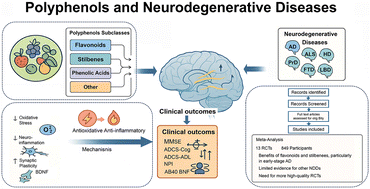
Given the potential of polyphenols to mitigate neurodegenerative diseases (NDDs), this meta-analysis investigated whether clinical evidence supports the use of polyphenols for neuroprotection and as nutritional strategies in NDDs. We analyzed different polyphenol types across seven NDDs, 13 studies involving 849 participants were included. Prespecified outcomes comprised global cognition (Mini-Mental State Examination, MMSE), domain-specific cognition (Alzheimer's Disease Cooperative Study–Cognitive Subscale, ADCS-Cog), activities of daily living (Alzheimer's Disease Cooperative Study–Activities of Daily Living, ADCS-ADL), neuropsychiatric symptoms (Neuropsychiatric Inventory, NPI), and selected biomarkers (plasma amyloid-β40 and brain-derived neurotrophic factor, BDNF). Reporting followed PRISMA 2020 guidelines, methods conformed to the Cochrane Handbook, and certainty of evidence was assessed using GRADE. Overall, polyphenol supplementation was associated with improved global cognition (pooled MD in MMSE = 2.06; 95% CI 0.62–3.49). In subgroup analyses, flavonoids were associated with a modest but significant improvement in MMSE scores, whereas stilbenes produced a significant benefit in daily functioning (ADCS-ADL) without clear gains in MMSE or ADCS-Cog and no consistent effects on NPI. Anthocyanidins, phenolic acids, and lignans did not significantly affect cognitive outcomes (MMSE or ADCS-Cog), and polyphenol subclasses did not yield robust or consistent changes in NPI or biomarker endpoints (Aβ40 and BDNF). Specific polyphenol subclasses therefore appear to confer selective cognitive and functional benefits, with stilbenes primarily supporting functional outcomes and flavonoids potentially enhancing global cognition.
- This article is part of the themed collections: Food & Function Review Articles 2026 and Food & Function HOT Articles 2026
 Please wait while we load your content...


