


 PLATFORM UPDATE:


Momordicine I, a triterpene from bitter melon (Momordica charantia L.), ameliorates alcohol-associated liver disease: research on the possible liver benefits
 *a
*a
Abstract
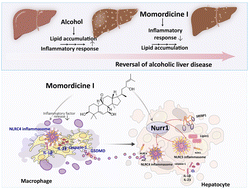
Momordicine I (M-I), a key bioactive and bitter-tasting triterpenoid in Momordica charantia L., has attracted significant research interest due to its potential hepatoprotective effects. This study investigated the mechanism by which M-I ameliorates lipid accumulation and metaflammation in alcohol-associated liver disease (ALD). Mouse primary hepatocytes were stimulated with ethanol and silenced with Nurr1-siRNA, treated with a conditioned medium from mouse peritoneal macrophages (MPMs), and then treated with M-I. M-I was administered to ALD mice by gavage, and a Nurr1-deficient model was established to systematically evaluate the effect of M-I and the function of Nurr1. Results indicated that M-I could significantly upregulate Nurr1 expression, thereby inhibiting the key factors of lipid synthesis. Meanwhile, it improves mitochondrial respiratory function, inhibits NLRC4/NLRC5 inflammasome activation, and reduces pro-inflammatory factor release. It is notable that M-I or C-DIM12 inhibits the expression of NLRC4 inflammasome and pyroptosis-related proteins in cells, reducing IL-1β as well as IL-18 secretion. Furthermore, M-I can effectively block the pro-inflammatory effect of the conditioned culture of activated macrophages on hepatocytes. Silencing of Nurr1 eliminates M-I's beneficial effects. In vivo, M-I intervention effectively improved liver steatosis, serum transaminase levels and mitochondrial function, while Nurr1 knockdown mice exhibited more severe ALD. In summary, M-I exerts liver-protective effects by targeting Nurr1, synergistically regulating lipid metabolism and mitochondrial function in hepatocytes, and inhibiting inflammatory responses. This study clarifies the new mechanism of M-I based on Nurr1, providing an important basis for its development as a therapeutic drug for ALD.
 Please wait while we load your content...


