


 PLATFORM UPDATE:


Secoisolariciresinol diglucoside resolves systemic and skin inflammation in psoriatic mice by ameliorating the gut microbiome and modulating immune responses
 †abc
†abc
Abstract
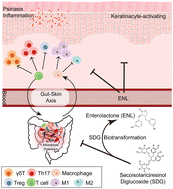
Psoriasis is a chronic inflammatory skin disease that often imposes enormous psychological impact on the patient, potentially leading to psychiatric comorbidities or even suicidality. The currently available treatments do not always provide satisfactory results. Our previous work demonstrates that secoisolariciresinol diglucoside (SDG) has potent anti-inflammatory effects. In this study, we aimed to assess the effect of SDG on resolving the psoriatic inflammation using an imiquimod (IMQ)-induced mouse model and elucidate the underlying mechanisms. SDG and its metabolite enterolactone (ENL) exhibited potent curative effects on the skin pathology. In association with the resolution of the psoriatic inflammation, the lignans (SDG and ENL) significantly ameliorated gut dysbiosis. In the meantime, the Treg cells and the anti-inflammatory CD163 macrophages were greatly expanded in number, while the F4/80 and iNOS macrophages, the pro-inflammatory γδ T and Th17 cells, and a broad range of inflammatory cytokines along with STAT1 were drastically decreased. These results demonstrate that SDG treatment can effectively resolve the systemic and skin inflammation in psoriasis by ameliorating the gut microbiome and modulating immune responses. Collectively, this study provides useful information for the development of curative therapeutic strategies with natural products to treat psoriasis.
 Please wait while we load your content...


