


 PLATFORM UPDATE:

A randomised controlled study to investigate the cognitive, mood, metabolic and anti-inflammatory effects of chronic oyster mushroom intervention in healthy older adults
 c
and
Claire M.
Williams
*a
c
and
Claire M.
Williams
*a
Abstract
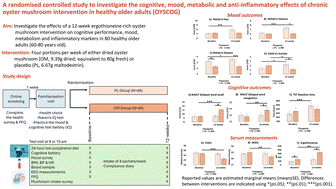
The Pleurotus ostreatus oyster species is a common edible mushroom, rich in ergothioneine, a bioactive that has previously shown preclinical benefits to cognition when administered in extract form. The OYSCOG study investigated the effects of a 12-week oyster mushroom intervention on cognition, mood, and serum markers in 80 healthy older adults aged 60–80 years. Participants consumed four portions per week of either oyster mushroom (OM) or placebo (PL). All measures were collected at baseline and 12-weeks post-intervention. EEG activity was recorded in a subset of participants (n = 40) at rest and during a simple cognitive task. ANCOVA between baseline and 12-weeks revealed slower task switching reaction times, indicating decreased performance, in the PL group. Increases in negative mood, as indicated by PANAS-X ratings of fear, sadness, and shyness and DASS-21 anxiety ratings, were similarly observed in the PL group. Conversely, DASS-21 anxiety ratings and RAVLT delayed word recall and delayed word recognition were improved for the OM group, while levels of inflammatory markers (cyclo-oxygenase 2 and NADPH oxidase 2) were reduced in an in vitro rodent microglial cell model. After 12-weeks supplementation, the OM group outperformed the PL group in RAVLT delayed word recall and delayed word recognition and displayed lower negative mood, as indicated by PANAS-X sadness, PANAS-X shyness and DASS-21 anxiety. Overall, the 12-week OM intervention, maintained mood and improved episodic memory in older adults compared to PL, alongside reducing markers of inflammation.
 Please wait while we load your content...


