


 PLATFORM UPDATE:


The dietary polyphenol resveratrol attenuates high-fat diet-induced testicular dysfunction via modulating the gut microbiota–testis metabolic axis
 †*a
Hongwei
Guo
a
and
†*a
Hongwei
Guo
a
and
Abstract
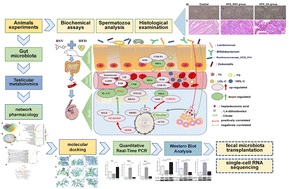
Resveratrol (RSV), a dietary bioactive polyphenol found in grapes, berries, and red wine, is a promising candidate for functional food development aimed at metabolic health. This study aimed to investigate its protective effects against high-fat diet (HFD)-induced testicular dysfunction, with a specific focus on the gut microbiota–testis axis. Using a mouse model, we integrated 16S rRNA sequencing, testicular metabolomics, network pharmacology, and molecular validation. Our results show that RSV improved sperm quality and systemic metabolism, normalizing serum lipid profiles. It reshaped the gut microbiota (notably enriching Bifidobacterium) and normalized testicular metabolites, including the antioxidant 1,4-dithiothreitol and the membrane-stabilizing heptadecanoic acid. Network pharmacology predicted key targets (TNF-α, IL-1β, PTGS2, HRAS, and the TCA cycle enzyme SDHB), which we validated experimentally. RSV enhanced mitochondrial TCA cycle activity (upregulating SDHB, ACO2, CS and MDH2), suppressed the NF-κB pathway, and promoted repair processes. Molecular docking confirmed stable binding of RSV to these targets. Collectively, this work elucidates the mechanism by which dietary RSV alleviates testicular impairment, thereby providing a mechanistic blueprint for its rational application as a functional food ingredient. This work translates molecular insights into a tangible strategy for developing targeted functional foods or dietary supplements to address diet-related male subfertility.
 Please wait while we load your content...


