


 PLATFORM UPDATE:


Preventive effects of sea cucumber-derived fucoidan on Helicobacter pylori-induced gastritis: a mechanistic investigation based on regulation of the gut microbiota and metabolic products
 abc
Xinpeng
Wang,
b
abc
Xinpeng
Wang,
b
Abstract
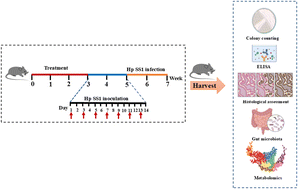
Helicobacter pylori (H. pylori) infection is a serious public health concern worldwide. This study evaluated the preventive effects of fucoidan extracted from sea cucumber cooking liquid (Fuc-SC) against gastritis induced by Helicobacter pylori SS1 (Hp SS1) infection. High-dose (150 mg kg−1) Fuc-SC significantly reduced levels of Hp SS1 immunoglobulin G (Hp-IgG) and cytotoxin-related gene A immunoglobulin G (CagA-IgG), while inhibiting urease activity, leading to an approximately 18% reduction in Hp SS1 colonization in the gastric mucosa. Fuc-SC also modulated oxidative stress more effectively than Fuc-LJ, suppressing nitric oxide (NO), malondialdehyde (MDA), and reactive oxygen species (ROS), likely due to its smaller molecular weight and higher sulfate content. Regarding inflammatory regulation, Fuc-SC dose-dependently down-regulated interleukin (IL)-1β, IL-6, T helper 17 (Th17) cells, interferon-γ (IFN-γ), and tumor necrosis factor-α (TNF-α), while up-regulating IL-10. These effects further modulated the expression of the inflammatory protein S100A8 and E-cadherin in the gastric mucosa, alleviating gastric inflammation. Moreover, 16S rRNA and metabolomics analyses revealed that Fuc-SC mitigates inflammatory responses by inhibiting pathogenic bacteria such as Dubosiella and Monoglobus, while promoting probiotics like Lactobacillus and Akkermansia, thereby enhancing the biosynthesis of short-chain fatty acids and beneficial metabolites, including naringenin, afzelechin, and pinocembrin. In summary, Fuc-SC exerts multifaceted protective effects on the gastric mucosa, highlighting its potential as a preventive strategy for H. pylori-associated gastritis.
 Please wait while we load your content...


