


 PLATFORM UPDATE:


Myricetin-3-O-galactoside in cranberries alleviates urinary tract infections in mice by inhibiting the adhesion of uropathogenic Escherichia coli CFT073
Abstract
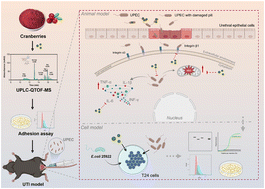
Urinary tract infections (UTIs) are among the most prevalent urological diseases worldwide, characterized by high morbidity and recurrence rates. Uropathogenic Escherichia coli (UPEC) is the predominant etiological agent of UTIs. It adheres to epithelial cells in the urethra or bladder via adhesins, followed by local colonization, proliferation, and induction of uroepithelial tissue damage and inflammation. However, the widespread use of antibiotics has led to increasing resistance in UPEC, posing significant challenges to the treatment of UTIs. In the present study, we successfully isolated and identified M-3-Gal as an antibacterial compound from cranberries. Research data indicated that oral administration of M-3-Gal before and after modeling in C57BL/6 mice significantly reduced bacterial loads in the urine, bladder, and kidneys of UTI mice, thereby alleviating UPEC-associated UTIs and reducing inflammatory and oxidative stress levels. In vitro experiments further revealed that M-3-Gal inhibits bacterial adhesion and invasion by suppressing the expression of bacterial adhesins, disrupting pilus structures, and downregulating the expression of cellular integrins.
 Please wait while we load your content...


