


 PLATFORM UPDATE:


S-Methyl cysteine sulfoxide: its effects on cardiometabolic outcomes in high-fat fed C57BL/6 mice and relevance to human health
 †*a
Armaghan
Shafaei
‡*d
and
†*a
Armaghan
Shafaei
‡*d
and
Abstract
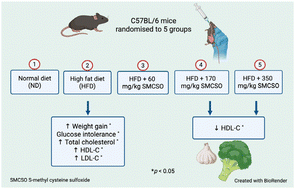
S-Methyl cysteine sulfoxide (SMCSO) is an organosulfur compound with demonstrated hypocholesterolemic, anti-diabetic, and antioxidant benefits in rodents. However, the doses used have limited translatability for humans. We explored whether SMCSO could blunt development of diet-induced metabolic syndrome features in mice using doses that are potentially more translatable and achievable in humans. Male mice (C57BL/6; n = 54) were randomly assigned into one of five groups: [1] normal-diet; [2] high-fat-diet; or high-fat-diet with [3] 60 mg kg−1, [4] 170 mg kg−1, or [5] 350 mg per kg per body weight (BW) of SMCSO, respectively. Doses were administered five days per week for 12 weeks via gavage. Repeated measure analysis of variance (ANOVA) was used to determine changes over time. One-way ANOVA with Dunnett's post hoc analysis determined differences between groups for all parametric data, with Kruskal–Wallis with Dunn's test used for non-parametric data. The high-fat fed group (group 2) was the comparator for all analyses with statistical significance set at p < 0.05. High-fat fed mice experienced weight gain, impaired glucose tolerance, elevated total cholesterol, high-density lipoprotein-cholesterol (HDL-C), and measured low-density lipoprotein-cholesterol (mLDL-C), compared to normal-diet fed mice (all p < 0.05). Adding 170 mg kg−1 and 350 mg per kg BW per day of SMCSO reduced diet-induced elevations in HDL-C (−11 to −12%), whilst 350 mg per kg per BW day lowered triglycerides (−16%), compared to high-fat fed mice (all p ≤ 0.05). Other cardiometabolic parameters were not significantly altered. SMCSO did not improve glucose tolerance, mLDL-C, or blunt weight gain in high-fat fed mice. The higher SMCSO doses (170 and 350 mg per kg BW per day) lowered diet-induced elevations in HDL-C, although the mechanism is unclear. Whether this finding has relevance to human health remains unknown.
- This article is part of the themed collection: FBHC 2025 - 5th International Conference on Food Bioactives & Health Special Collection
 Please wait while we load your content...


