


 PLATFORM UPDATE:


Effect of maqui berry extract consumption on postprandial responses in mice: actions on digestive enzymes and relevance of DPP-IV inhibition
 ab
Carmen
Carrieri,
d
Claudia
Favari,
d
Letizia
Bresciani,
d
Pedro
Mena,
d
César G.
Fraga
abe
and
Monica
Galleano
*ab
ab
Carmen
Carrieri,
d
Claudia
Favari,
d
Letizia
Bresciani,
d
Pedro
Mena,
d
César G.
Fraga
abe
and
Monica
Galleano
*ab
Abstract
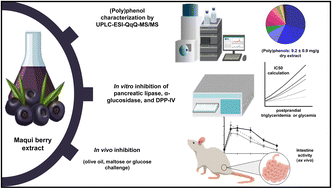
Obesity remains a major global public health concern. Existing strategies to cope with obesity include inhibiting key digestive enzymes. This study evaluated the inhibitory potential of a maqui berry extract (MBE) against the digestive enzymes pancreatic lipase, α-glucosidase, and dipeptidyl-peptidase-4 (DPP-IV), which are involved in lipid and glucose absorption and homeostasis. We characterized MBE composition using UPLC-ESI-QqQ-MS/MS, identifying 30 (poly)phenols, 86% of which were anthocyanins derived from delphinidin and cyanidin. Results showed that MBE inhibited lipase, α-glucosidase, and DPP-IV in vitro with half-maximal inhibitory concentrations (IC50) of 3.3 ± 0.1, 38 ± 5, and 3.1 ± 0.4 µg mL−1, respectively. In vivo evaluation of enzyme inhibition was performed in male mice orally challenged with olive oil, maltose, or glucose, and postprandial lipemia or glycemia was subsequently measured. MBE treatment only affected the postprandial glycemia induced by the glucose challenge. This suggests DPP-IV inhibition, which is supported by the lower activity of DPP-IV in the intestine and plasma of mice treated with MBE. Given the composition of MBE, it is feasible that the postprandial effects were mediated by the anthocyanidins present in the fruit. In summary, this study shows that MBE can modulate key metabolic enzymes, particularly DPP-IV, with promising implications for the dietary management of postprandial glycemia in metabolic disorders.
- This article is part of the themed collection: Food & Function HOT Articles 2026
 Please wait while we load your content...


