


 PLATFORM UPDATE:


Impact of the orange juice fruit matrix on postprandial glycemia: a crossover randomized trial in healthy young men with post hoc analysis of interindividual response variability
 *a
Rocío
García-Villalba,
a
Pilar
Zafrilla,
b
Gary
Williamson,
e
Francisco A.
Tomás-Barberán
a
*a
Rocío
García-Villalba,
a
Pilar
Zafrilla,
b
Gary
Williamson,
e
Francisco A.
Tomás-Barberán
a
Abstract
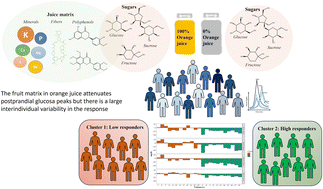
The impact of fruit juices on postprandial glucose response (PPGR) remains controversial due to their free sugar content. The aim of this study was to investigate the effect of the fruit matrix in 100% orange juice (OJ) on PPGR. In this randomized crossover trial, we compared the intake of 300 mL of 100% OJ to sugar-matched drinks with reduced (50% OJ) or no (0% OJ) fruit matrix and a glucose control (25 g sugar) in healthy young males. We characterised the juices for nutrients and (poly)phenols and measured glucose and insulin over 2 hours. We also analysed interindividual variability and performed a post-hoc cluster analysis of the participants based on the different responses to the drinks. Metabolomics was used to further explore plasma differences between clusters. Differences in incremental area under the curve (iAUC) with the 100% OJ and 50% OJ against the 0% OJ did not reach significance, but the 100% OJ significantly lowered the glucose peak (Cmax) compared to 0% OJ and reduced glucose levels at 15 minutes (C15 min) compared to 50% OJ and 0% OJ. High interindividual variability was expressed as ‘high responders’ with larger differences in Cmax between 100% OJ and 0% OJ than ‘low responders’ as well as differences in the 60 min plasma metabolomes, particularly in OJ-derived metabolites like dihydroferulic acid glucuronide. The OJ fruit matrix attenuates postprandial glucose peaks and rate of glucose rise in healthy young males. The occurrence of responder groups with differentiated plasma metabolomes underscores the importance of considering both the food matrix and individual physiological differences when assessing the glycemic impact of fruit juices.
 Please wait while we load your content...


