


 PLATFORM UPDATE:


Influence of gestational diabetes mellitus on the breast milk microbiota and oligosaccharides and their effects on the infant gut microbiota

Abstract
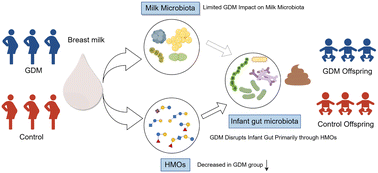
While the interplay between gestational diabetes mellitus (GDM) and the maternal–infant microbial axis is increasingly recognized, the specific pathways of influence remain unclear. This study comprehensively investigated the impact of GDM on the breast milk microbiota, human milk oligosaccharides (HMOs), and the subsequent development of the infant gut microbiota. We analyzed breast milk and paired infant fecal samples collected from healthy and GDM-affected mothers at two time points (0–7 and 42 days postpartum). The microbiota of both sample types was profiled by metagenomic sequencing, and HMOs in breast milk were quantified via liquid chromatography-tandem mass spectrometry (LC-MS/MS). Our findings revealed that GDM had a strong influence on the infant gut microbiota via reducing HMO concentrations than via direct alterations to the breast milk microbiota. These GDM-associated HMO alterations induced stage-specific shifts in the offspring's gut microbiota. Notably, the correlation between specific HMOs and gut bacteria reversed from the colostrum stage to the mature milk stage. This suggests that HMOs influence microbial colonization not only through direct utilization but also, and perhaps more importantly, via indirect ecological mechanisms such as cross-feeding. Collectively, our results identify maternal HMOs as a critical link between maternal metabolism and infant gut health, highlighting their potential as a promising nutritional target to improve long-term metabolic outcomes in GDM-exposed infants.
 Please wait while we load your content...


