


 PLATFORM UPDATE:


Salty taste preference, genetic susceptibility, and risk of metabolic dysfunction-associated steatotic liver disease: insights from three prospective cohorts

Abstract
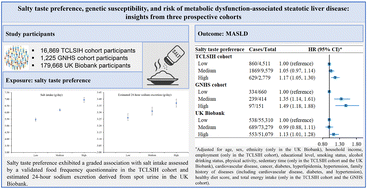
Background and aims: Animal studies have suggested that high salt intake might increase the risk of metabolic dysfunction-associated steatotic liver disease (MASLD), but results from populations are mixed, in part due to inadequate salt intake measurement. Salty taste preference is the primary factor leading to salt choice and can reflect habitual salt intake. However, no study has investigated the association between salty taste preference and MASLD. This study aimed to determine the association between salty taste preference and risk of MASLD, while considering genetic predisposition to MASLD. Methods: This multicohort study used data from the Tianjin Chronic Low-grade Systemic Inflammation and Health (TCLSIH) cohort (n = 16 869), the Guangzhou Nutrition and Health Study (GNHS) cohort (n = 1225), and the UK Biobank (n = 179 668). Salty taste preference was assessed using self-reported questionnaires. Incident MASLD was ascertained using abdominal ultrasound or electronic health records. Hazard ratios (HRs) and 95% confidence intervals (CIs) were calculated using Cox proportional hazards models. Results: During follow-up, we documented 3358 MASLD cases in the TCLSIH cohort, 670 cases in the GNHS cohort, and 1780 cases in the UK Biobank. The adjusted HRs (95% CIs) of incident MASLD across the three cohorts were 1.17 (1.05, 1.30), 1.49 (1.18, 1.88), and 1.13 (1.01, 1.28), comparing high with low salty taste preference. Such associations were mediated by 29.8%–49.4% for body mass index and 49.4%–64.5% for waist circumference. Individuals with high salty taste preference and genetic risk had the strongest risk elevation for MASLD, though no significant interaction was observed. Conclusion: Salty taste preference, a proxy for long-term salt intake, was positively associated with risk of MASLD, especially in individuals with high genetic predisposition.
- This article is part of the themed collection: Food & Function HOT Articles 2025
 Please wait while we load your content...


