


 PLATFORM UPDATE:


Sulforaphane attenuates DSS-induced ulcerative colitis via the Nrf2/STAT3 signaling pathway and gut microbiota modulation
 a
Canxia
He
*ac
a
Canxia
He
*ac
Abstract
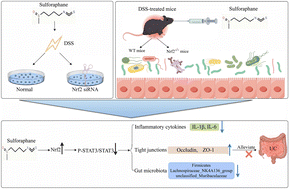
Sulforaphane (SFN) is an isothiocyanate derived from cruciferous vegetables. Our previous studies have shown that nuclear factor (erythroid-derived 2)-like 2 (Nrf2) and signal transducer and activator of transcription 3 (STAT3) may play roles in the protective effects of SFN against dextran sulfate sodium (DSS)-induced ulcerative colitis (UC) in mice. This study aims to elucidate the underlying mechanisms. GEO database analysis revealed that Nrf2 expression was reduced, while STAT3 expression was elevated in the colonic mucosa of UC patients compared to healthy controls (P < 0.01). In the DSS-induced Caco-2 cell model, Nrf2 siRNA transfection abolished the effects of SFN on enhancing Nrf2 and tight junction protein expression, suppressing inflammatory factors and reducing the phosphorylated-STAT3/STAT3 ratio. In DSS-induced UC mice, SFN alleviated colitic symptoms in wide-type mice, including weight loss, colon edema and shortening, and inflammatory cell infiltration. SFN also reduced the levels of inflammatory cytokines and enhanced tight junction protein expression in wide-type mice with colitis. However, these protective effects were largely abolished in Nrf2 knockout mice. Moreover, in Nrf2 knockout colitis mice, SFN reduced the gut microbial diversity and decreased the relative abundance of Firmicutes at the phylum level, as well as Muribaculaceae and Lachnospiraceae_NK4A136 at the genus level. In conclusion, the protective effects of SFN against UC may involve the regulation of the Nrf2/STAT3 signaling pathway and modulation of the gut microbiota, highlighting Nrf2 as a key mediator of SFN's action.
 Please wait while we load your content...


