


 PLATFORM UPDATE:


N-Acetylneuraminic acid and 3′-sialyllactose supplementation unlock shared and unique atheroprotective mechanisms through the gut–liver–coronary axis in hypercholesterolemic LDLR−/− mice
 *a
*a
Abstract
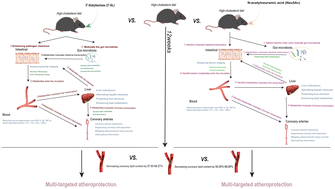
Background: Atherosclerosis remains a major global health burden. Sialic acid (N-acetylneuraminic acid, Neu5Ac) and its derivative 3′-sialyllactose (3′-SL) show potential for prevention, but their mechanisms of action are unclear. This study investigated their prophylactic effects and underlying mechanisms in an atherosclerotic model. Methods: Forty male LDLR−/− mice were randomly assigned to four groups (n = 10 per group): (1) high-cholesterol diet (HCD) control, (2) HCD + Neu5Ac (oral), (3) HCD + 3′-SL (oral) and (4) normal chow control. Ten wild-type C57BL/6J mice served as baseline controls. After 12 weeks of intervention, atherosclerotic plaque formation, serum lipids (total cholesterol (TC), triglycerides (TG), LDL and HDL), inflammatory markers (hs-CRP, IL-1β and TNF-α), hepatic lipid deposition, coronary chemokines (CXCL1 and CCL5), LOX-1, and cytokines (IL-18 and IFN-γ) were assessed. Multi-omics analyses (16S rRNA sequencing for the gut microbiota, hepatic transcriptomics, and metabolomics) were performed. Statistical analysis used one-way or two-way ANOVA followed by Tukey's post-hoc test, with P < 0.05 considered significant. Results: Both Neu5Ac and 3′-SL significantly attenuated atherosclerosis compared to HCD controls. Key findings included: reduced serum inflammation (hs-CRP, IL-1β and TNF-α) and improved lipid profiles (reduced TC, TG, LDL and increase HDL); decreased hepatic lipid deposition; lowered coronary chemokines (CXCL1 and CCL5), LOX-1, and pro-inflammatory cytokines (IL-18 and IFN-γ); and diminished atherosclerotic plaque formation. Multi-omics revealed synergistic protection involving: metabolic remodeling (coordinated regulation of cholesterol, fatty acid, and bile acid metabolism); anti-inflammatory/antioxidant effects (suppression of pro-inflammatory pathways and oxidative stress); and multi-organ protection (enhanced gut barrier integrity/pathogen clearance; upregulated hepatic detoxification/reduced steatosis; stabilized coronary extracellular matrix/endothelial function). It is noteworthy that 3′-SL primarily modulates the gut microbiota and its metabolites, thereby indirectly ameliorating liver and coronary lesions, whereas Neu5Ac could be absorbed directly to improve liver metabolism and exert anti-inflammatory effects. Conclusions: Neu5Ac and 3′-SL exert potent prophylactic effects against HCD-induced atherosclerosis in LDLR−/− mice. These effects are mediated through synergistic modulation of metabolic, inflammatory, and microbial pathways along the gut–liver–coronary axis. This axis integrates lipid metabolism, inflammation, and oxidative stress responses, highlighting a novel multi-targeted mechanism for atheroprotection. These findings support the potential of sialylated compounds as dietary interventions for atherosclerosis prevention.
 Please wait while we load your content...


