


 PLATFORM UPDATE:


Walnut peptide and theanine combination ameliorates sleep disorders: a multi-species study including a human trial

Abstract
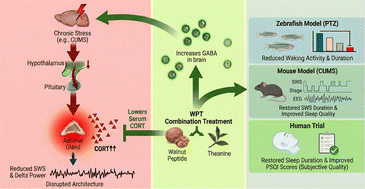
Chronic stress-induced sleep disorders are characterized by disrupted sleep architecture and a significant reduction in slow-wave sleep (SWS). These disorders represent a major public health challenge and are mechanistically linked to the hyperactivation of the hypothalamic-pituitary-adrenal (HPA) axis. This study employed a translational research paradigm-including zebrafish screening, a chronic unpredictable mild stress (CUMS) mouse model, and an eight-week randomized, placebo-controlled human trial-to evaluate the efficacy of a combination of walnut peptide and theanine (WPT). Treatment with WPT reduced waking activity and duration in pentylenetetrazole (PTZ)-induced zebrafish. In CUMS mice, the combination significantly improved sleep architecture by restoring the duration of SWS and enhanced sleep quality by increasing delta wave power density. Mechanistically, the intervention corrected hypothalamic-pituitary-adrenal (HPA) axis hyperactivity by lowering elevated serum corticosterone (CORT) levels. Furthermore, it modulated central neurotransmitters, notably reversing stress-induced deficits by increasing the levels of the inhibitory neurotransmitter GABA and tryptophan, a key precursor for serotonin and melatonin. In the human trial, the WPT restored sleep duration and improved subjective sleep quality scores (assessed by the Pittsburgh Sleep Quality Index, PSQI). In conclusion, this translational study provides robust evidence that the WPT effectively improves chronic stress-induced sleep disorders in zebrafish and mice, and improves sleep disturbances in adults (PSQI ≥ 7) by regulating HPA axis function and restoring the duration and quality of SWS. This makes it a highly promising nutritional intervention strategy.
- This article is part of the themed collection: Food & Function HOT Articles 2026
 Please wait while we load your content...


