


 PLATFORM UPDATE:


Dietary lysophospholipid alleviates diarrhea and improves intestinal health in weaned piglets challenged with enterotoxigenic Escherichia coli K88

Abstract
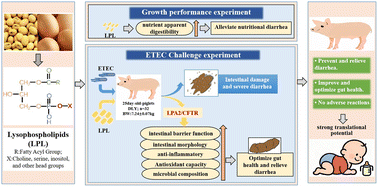
Enterotoxigenic Escherichia coli (ETEC) is a leading cause of diarrhea in infants and young children. lysophospholipid (LPL) has been shown to enhance lipid and nutrient absorption while improving intestinal morphology and function in animals. Owing to the close similarity between their gastrointestinal physiology and that of human infants, weaned piglets are widely employed as the animal model for gastrointestinal disease research. This study investigated the effects of dietary LPL (containing 6% active ingredient) supplementation on intestinal health and diarrhea mitigation under ETEC challenge. Thirty-two weaned barrows (Duroc × Landrace × Yorkshire, 7.24 ± 0.07 kg BW, 25 days of age) were randomly assigned to four groups based on body weight. The dietary treatments included: (1) basal diet (CON), (2) basal diet + ETEC K88 (CON + ETEC), (3) basal diet + 0.3% LPL (CON + LPL), and (4) basal diet + 0.3% LPL + ETEC K88 (LPL + ETEC). The results demonstrated that LPL significantly improved the apparent total-tract digestibility of nutrients in piglets (P < 0.05) without affecting growth performance (P > 0.05). In addition, LPL significantly reduced diarrhea incidence in piglets before and after ETEC challenge (P < 0.05). LPL effectively ameliorated ETEC-induced intestinal morphological damage, including improvements in villus height and crypt depth (P < 0.05). LPL also upregulated expressions of intestinal barrier-related genes (MUC1, Occludin and LPA2) in different intestinal segments (P < 0.05) while counteracting ETEC-induced CFTR upregulation and MUC2 downregulation. Furthermore, LPL enhanced antioxidant capacity by reducing serum malonaldehyde (MDA) content (P < 0.05) and increasing ileal total superoxide dismutase (T-SOD) and glutathione peroxidase (GSH-Px) activities (P < 0.05), while mitigating inflammatory responses through decreasing serum IL-1β and IL-6 levels (P < 0.05). In summary, LPL enhances nutrient digestion and absorption to alleviate nutritional diarrhea and, via the LPA2/CFTR pathway, preserves intestinal barrier structure and function during ETEC infection while exerting anti-inflammatory and antioxidant effects to reduce diarrhea and improve gut health, demonstrating strong translational potential for preventing and treating ETEC induced diarrhea.
 Please wait while we load your content...


