


 PLATFORM UPDATE:


NAFLD-related SNPs are linked to changes in liver fat, as measured by the CAP score, and serum lipids in response to a 3-week sugar-sweetened beverage intervention: a pilot study

Abstract
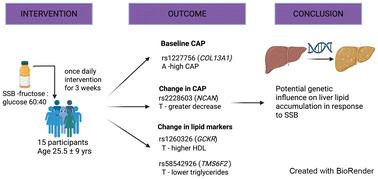
Studies show that increased consumption of sugar-sweetened beverages (SSBs) is linked to non-alcoholic fatty liver disease (NAFLD), a condition characterized by excess fat accumulation in hepatocytes. Genetic factors also influence NAFLD. We conducted a clinical trial (NCT03783195) to determine if SNPs related to NAFLD are associated with liver fat content and its changes in response to a 3-week SSB intervention in Caucasian adolescents and young adults. Fifteen participants (5 males and 10 females, mean age 25.5 ± 9 years) consumed a beverage daily for 3 weeks, consisting of fructose : glucose in a 60 : 40 ratio. Liver fat content was measured by transient elastography through the controlled attenuation parameter (CAP) score. At baseline, the CAP score was 212.5 ± 10.1 dB m−1 and was not significantly different between sexes. We genotyped ten NAFLD-related SNPs, of which rs1227756 in COL13A1 (β = −22.4 ± 7.5, p < 0.05) was associated with the baseline CAP score. Individuals carrying the AA allele had significantly higher CAP scores than those carrying GG (234 ± 34.7 dB m−1vs. 188 ± 25.3 dB m−1). The CAP score decreased post-SSB intervention, and the change was significantly associated with rs2228603 in NCAN (β = −20.1 ± 7.6, p < 0.05). The T-allele carriers showed a greater reduction in the CAP score as compared to CC carriers (mean ± SE −23.3 ± 5.8 dB m−1vs. −18.24 ± 43.2 dB m−1). This change was, however, not observed when adjusted for age, sex and body composition. Significant associations were also observed between changes in serum HDL and rs1260326 in GCKR and triglycerides and rs58542926 in TMS6F2. This pilot study shows a potential role of genetics in liver fat changes and serum lipids in response to SSB intervention that warrants a detailed investigation in a larger sample for a longer duration.
- This article is part of the themed collection: Precision nutrition
 Please wait while we load your content...


