


 PLATFORM UPDATE:


Potential lipid-lowering effects of Northern Thai vegetable extracts on the inhibition of cholesterol absorption: emerging in vitro and in vivo models

Abstract
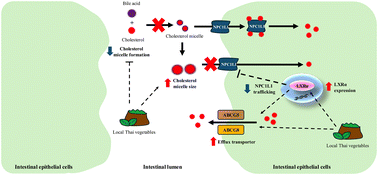
Obesity has emerged as a major health issue caused by the alteration of lipid profiles, including hypercholesterolemia, hypertriglyceridemia, and dyslipidemia, necessitating the prevention of hyperlipidemia. Several local Thai vegetables have been recognized for their potent anti-oxidant properties. However, there is limited information regarding their lipid-lowering effects. Therefore, this study aims to investigate and identify the mechanisms underlying the cholesterol-reducing effects of functional ingredients derived from the aqueous extracts of seven local Thai vegetables using in vitro, ex vivo, and in vivo models. The findings suggest that the antioxidant-rich extracts have potential to serve as functional ingredients due to their ability to inhibit cholesterol absorption in intestinal colorectal adenocarcinoma (Caco-2) cells. Among these, the aqueous extracts from Piper sarmentosum Roxb. (PSRAE), Solanum torvum Sw. (STSAE), and Acmella oleracea L. (APAE) showed the most potent lipid-lowering effects through increasing cholesterol micelle size and interfering its formation. Moreover, these extracts modulated lipid homeostasis through distinct mechanisms, including the inhibition of cholesterol synthesis and absorption and stimulation of lipid secretion. Lipid-lowering effects were further confirmed in intact jejunal loops, where PSRAE and STSAE demonstrated the highest cholesterol-lowering efficacies. However, a single oral administration in rats revealed that PSRAE decreased the cholesterol levels only in the serum, intestinal and hepatic tissues. Therefore, PSRAE designated as the most potent lipid-lowering candidate. Nonetheless, long-term efficacy and safety of these extracts require further investigation. Thus, a promising set of functional ingredients derived from local Thai vegetables could serve as future foods for controlling hyperlipidemia and preventing non-communicable diseases.
 Please wait while we load your content...


