


 PLATFORM UPDATE:


Metabolic benefits of 1,3-diacylglycerol in type 2 diabetes mellitus and its association with gut microbiota-derived SCFAs-GPR41-GLP-1 signaling
 †a
Jiaojiao
Gu
*b
†a
Jiaojiao
Gu
*b
Abstract
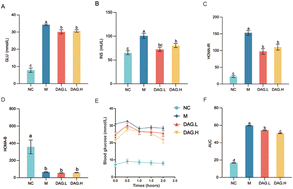
1,3-Diacylglycerol (1,3-DAG) is a dietary lipid with known lipid-lowering effects, yet its role in type 2 diabetes mellitus (T2DM) and gut microbiota regulation remains unclear. This study investigated the effects of 1,3-DAG on glucose-lipid metabolism and gut microbiota- short chain fatty acid (SCFA)-G protein-coupled receptors (GPR41) signaling in T2DM rats. Male Wistar rats were fed a high-fat, high-sugar diet with weekly Streptozotocin (STZ) injections (30 mg kg−1) for 4 weeks to induce T2DM. After confirming stable hyperglycemia, rats were randomly divided into four groups: healthy control, T2DM model, low-dose 1,3-DAG (50% DAG + 50% TAG), and high-dose 1,3-DAG (100% DAG). Interventions lasted 8 weeks. Compared to the T2DM model group, both low- and high-dose DAG significantly reduced fasting blood glucose, insulin, and triglycerides, with levels approaching those in the control group. 1,3-DAG also restored colonic morphology, elevated GPR41 expression, and increased Glucagon-like peptide-1 (GLP-1) and peptide YY (PYY) secretion, while reducing serum lipopolysaccharide (LPS). Microbiota analysis showed enrichment of Bacteroidota and depletion of Proteobacteria, with increased SCFA levels including acetate, propionate, and valerate. Importantly, Bacteroidota-related taxa were negatively correlated with glycemic and lipid markers, while Proteobacteria taxa showed positive correlations with low-density lipoprotein cholesterol (LDL-C) and negative correlations with high-density lipoprotein cholesterol (HDL-C). 1,3-DAG significantly improved glycemic control, lipid metabolism and intestinal barrier integrity in T2DM rats. These benefits may be mediated through the gut microbiota-SCFA-GPR41-GLP-1 signaling axis. The findings suggest that 1,3-DAG is a promising dietary intervention for T2DM. Further clinical studies are warranted to validate its long-term efficacy and therapeutic potential.
 Please wait while we load your content...


