


 PLATFORM UPDATE:


Ulva lactuca extracellular vesicles protect against high-fat diet-induced intestinal damage via Nrf2/Keap1/HO-1 activation
 *d
Wentao
Su
*ab
*d
Wentao
Su
*ab
Abstract
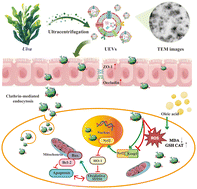
High-fat diets (HFDs) impair the intestinal barrier by increasing permeability and oxidative stress, which contribute to obesity-related disorders. Ulva lactuca, a marine green alga, produces extracellular vesicles (UEVs) that remain underexplored as functional food components. In this study, UEVs were isolated and characterized, showing a cup-like shape morphology with an average diameter of 188.8 ± 70.5 nm. Functional assays demonstrated that UEV treatment significantly reduced intracellular ROS levels by 41.77%, decreased apoptosis by 11.31%, and restored the expression of tight junction proteins (ZO-1 and Occludin). In a gut-on-a-chip model, UEVs increased transepithelial electrical resistance (TEER) by 1.14 times and enhanced mucin secretion under HFD-mimicking stress. Mechanistic studies revealed that UEVs activated the Nrf2/Keap1/HO-1 signalling pathway, promoting nuclear translocation of Nrf2 and upregulating antioxidant genes. Collectively, these findings highlight UEVs as novel food-derived nanostructures with dual functions in oxidative stress reduction and intestinal barrier protection, supporting their potential in functional food applications targeting metabolic gut disorders.
- This article is part of the themed collection: Precision nutrition
 Please wait while we load your content...


