


Effect of κ-carrageenan with different molecular weights and its acetylated derivatives on the structure and metabolites of the intestinal flora

Abstract
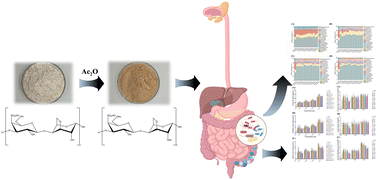
The digestive fermentation characteristics of κ-carrageenan with different molecular weights and its acetylated derivatives were investigated by analyzing the variation patterns of the intestinal flora and metabolites. The results showed that κ-carrageenan with different molecular weights and its acetylated derivatives were not digested in the oral–gastric–small intestinal digestion process but could be fermented by the colonic flora and were mainly degraded in the ascending colon stage. The lower molecular weight κ-carrageenan was more likely to increase the abundance of Proteobacteria and Enterobacteriaceae and decreased colonic acetic acid production at the transverse-descending colon, which could be reversed by the acetylation modification of κ-carrageenan. Meanwhile, the acetylation modification of κ-carrageenan increased the abundance of beneficial bacteria such as Lactobacillus and Bifidobacterium, and greatly increased the content of acetic acid. Moreover, the increased acetic acid from acetylated κ-carrageenan fermentation was produced by the Wood–Ljungdahl pathway, with the up-regulated expression of acetyl–coenzyme A, acetate kinase, and formate dehydrogenase. The results indicated that acetylation modification can ameliorate the potential intestinal dysbiosis caused by κ-carrageenan, especially low-molecular-weight κ-carrageenan, by increasing the beneficial gut microbiota e.g., Lactobacillus and acetic acid metabolism, which can provide precise molecular evidence for the functional optimization of κ-carrageenan and its application in intestinal health.
 Please wait while we load your content...


