


 PLATFORM UPDATE:


Bioaccessible sulforaphane attenuates oxidative stress-driven parainflammation in intestinal epithelial cells

Abstract
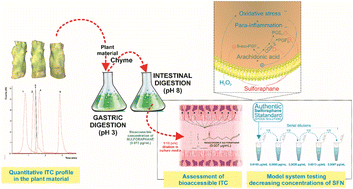
The dietary consumption of plant-based foods rich in sulforaphane (SFN) and its precursor, glucoraphanin, contributes to health due to SFN's ability to mitigate inflammation. Based on this premise, the present study aims to demonstrate the capacity of bioaccessible breakdown compounds from glucosinolate (SFN) obtained from a broccoli stalk-based ingredient to prevent parainflammatory syndrome associated with oxidative stress, which is strongly linked with a range of metabolic diseases and ageing. UHPLC-ESI-QqQ-MS/MS-based analysis revealed SFN as the only organosulfur compound at a quantifiable concentration in the bioaccessible fraction (4.32 mg per kg dw, corresponding to 0.072 µg mL−1 of SFN). The assessment of SFN on the in vitro ability to decrease cyclooxygenase-2 (COX-2) concentration and modulate oxidative stress (8-iso-PGF2α) and inflammatory markers (PGF2α and PGE2) evidenced a significant anti-inflammatory capacity, which is, to some extent, independent of the weaker capacity to prevent oxidative stress. This result was further confirmed by implementing a model system, which analysed COX-2 expression and the synthesis of isoprostanoids at decreasing concentrations of SFN, starting at the bioaccessible level. The main results obtained emphasise the value of broccoli stalks as a source of antioxidant and anti-inflammatory compounds at operative concentrations in the intestinal lumen and encourage their consideration as a valuable ingredient for health-promoting co-products.
 Please wait while we load your content...


