


 PLATFORM UPDATE:


Profiling of peptides from wet- and dry-heated milk proteins after in vitro infant digestion and intestinal transport, and their effects on mucus production and innate immunity

Abstract
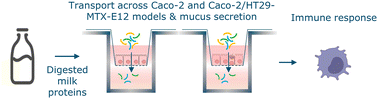
Milk proteins undergo both wet and dry heating steps during infant formula production, which can affect their gastro-intestinal digestion, subsequent peptide formation, intestinal transport, and immunoreactivity. Additionally, some milk peptides were previously shown to influence intestinal mucus production. However, the direct link between dry and wet heating of milk proteins, their digestion, and subsequent effects on mucus production, intestinal transport, and immunoreactivity remains unclear. To investigate this, milk proteins remained unheated, or were either wet or dry heated, followed by digestion using an in vitro infant digestion model. Peptides were identified with LC-MS/MS, and assessed for effects on intestinal mucus production with HT29-MTX-E12 cells, intestinal epithelial transport with Caco-2 monocultures and Caco-2/HT29-MTX-E12 cocultures, and immunoreactivity by predicting epitopes and by stimulating primary immature dendritic cells (iDCs) with transported peptides. Results showed that both wet and dry heating affected the HLA-II epitope survival during intestinal digestion, whereas linear IgE epitope survival was unaffected. The digestion-derived peptides did not alter mucus production. Wet heating reduced peptide transport in both cell models, whereas dry heating reduced peptide transport in the monoculture but did not affect peptide transport in the coculture. Moreover, dry heating increased transport of HLA-II epitopes from β-casein and transport of IgE epitopes in the coculture. Transported milk peptides did not affect cytokine production by iDCs. Together, this shows that wet and dry heating affect milk protein digestion, survival of immunoreactive peptides, and their intestinal transport. Further research is needed to clarify their effects on the immunoreactivity of intestinal and transported milk peptides.
 Please wait while we load your content...


