


 PLATFORM UPDATE:


Almond oil extraction residues as functional ingredients: nutritional composition, biological activities, and polyphenol in vitro bioaccessibility

Abstract
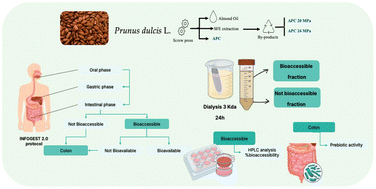
Cold-pressed almond oil is considered a premium product due to its solvent-free extraction and sensory quality. Its industrial production produces large volumes of a nutrient-rich by-product, namely almond press cake (APC). In this study, this by-product was submitted to supercritical fluid extraction (SFE) with CO2 using two different pressure conditions for extracting residual oil in APC, further generating two residues (APC20 and APC24, from extraction at 20 and 24 MPa, respectively). Except for fat, which, as expected, was reduced in APC20 and APC24, and available carbohydrates, which were higher in the SFE-derived samples, the three residues showed similar contents of the remaining macronutrients (p > 0.05). The residues were particularly rich in total dietary fiber (from 73.7 to 76.2 g per 100 g), presenting also relevant quantities of protein (from 9.3 to 9.5 g per 100 g). APC20 and APC24 showed a strong retention of phenolic compounds, with only about a 10% decrease of total phenols compared to APC. In vitro digestion using the INFOGEST protocol revealed that some phenolic compounds exhibited high bioaccessibility values, with taxifolin, amygdalin, caffeic acid, vanillic acid, protocatechuic acid, and quercetin-3-O-glucoside exceeding 100% bioaccessibility. Moreover, the antioxidant potential of bioaccessible fractions after simulated digestion was superior to that exhibited by non-digested samples. Furthermore, the prebiotic potential of digested residues was evident through the promotion of Lactobacillus and Bifidobacterium growth, comparable to inulin. Altogether, these results highlight the value of almond oilcake and its extraction residues as promising and sustainable functional food ingredients.
 Please wait while we load your content...


