


 PLATFORM UPDATE:


Identification, characterization and resistance to digestion assessment of hemp-derived dipeptidyl-peptidase IV inhibitory peptides
 abc
Fernando
Rivero-Pino,
*de
Sergio
Montserrat-de la Paz,
de
Richard J.
FitzGerald
abc
and
Maria C.
Millan-Linares
f
abc
Fernando
Rivero-Pino,
*de
Sergio
Montserrat-de la Paz,
de
Richard J.
FitzGerald
abc
and
Maria C.
Millan-Linares
f
Abstract
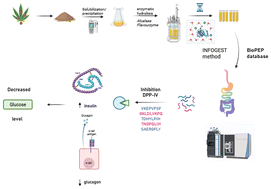
Hemp seeds (Cannabis sativa L.) are an adequate source of protein. Food-derived peptides exert bioactivity depending on the sequences. In this work, enzymatic hydrolysis with Alcalase (subtilisin) and Flavourzyme was carried out to obtain hemp protein hydrolysates with increased dipeptidyl-peptidase IV (DPP-IV) inhibitory activity. In addition, the hydrolysates were subjected to digestion following the INFOGEST protocol. The serial hydrolysis with both proteases showed the highest inhibition compared to the hydrolysis only with Alcalase. The peptides sequences contained in the samples and the digested samples were identified and characterized employing different bioinformatics tools. The sequences TNGPQLIH (released after addition of Flavourzyme), and GKLDLVKPQ (from Alcalase-treated samples) were proposed as the most active peptides. The peptides were chemically synthesized, and TNGPQLIH showed an IC50 value of 1.70 mg mL−1. The DPP-IV inhibitory activity was generally conserved or improved after digestion. These peptides could be employed as constituents in foods helping to prevent the development of diabetes.
 Please wait while we load your content...


