


 PLATFORM UPDATE:


Soft drink consumption associated with depressive symptoms among the general population: consistent and robust evidence from a systematic review and meta-analysis

Abstract
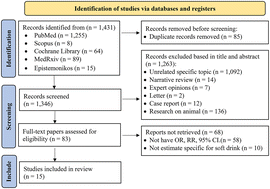
Objectives: The consumption of soft drinks, such as carbonated or non-carbonated beverages, including sugars or artificial sweeteners, flavorings, colorings, acidulants, and preservatives, has recently emerged as a major global public health problem. This review aims to analyse the evidence on the association between soft drink consumption and depressive symptoms among the general population. Methods: Five electronic databases (PubMed, Scopus, Cochrane Library, Epistemonikos, and medRxiv) were searched for relevant articles published up to 31 January 2024. All the studies were evaluated using the Newcastle–Ottawa scale. The pooled odds ratio and 95% confidence intervals (CIs) were estimated using a random-effects model in the presence of heterogeneity. Heterogeneity among the studies was assessed using I2 statistics. Egger's test was used to evaluate publication bias. Results: Fifteen studies involving 55 635 cases of depressive symptoms among 521 392 participants were included. The pooled OR of depressive symptoms for the highest versus the lowest consumption of soft drinks was 1.39 (95% CI: 1.26–1.52). The association demonstrated statistical significance in cross-sectional studies (OR = 1.45, 95% CI: 1.24–1.70) and cohort studies (OR = 1.34, 95% CI: 1.19–1.51). In the subgroup analysis, sugar-sweetened beverages (SSBs) and sugar-sweetened carbonated beverages (SSCBs) revealed a rise in the trend of depressive symptoms. The linear dose–response meta-analysis showed no statistically significant association between dose and depressive symptoms. Conclusion: Our findings suggest that more rigorous and targeted policy interventions are warranted to curtail soft drink consumption in order to alleviate the global burden of depression.
- This article is part of the themed collection: Food & Function Review Articles 2026
 Please wait while we load your content...


