


 PLATFORM UPDATE:


Optimization of spray-dried green tea polyphenol microcapsules using a yeast-derived polysaccharide-rich fraction: encapsulation performance, structural characterization, and controlled release behavior
 ab
and
Tuyen Chan
Kha
*a
ab
and
Tuyen Chan
Kha
*a
Abstract
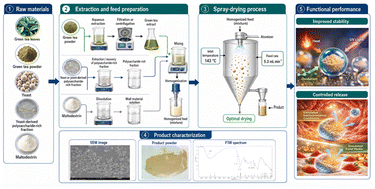
Polyphenols are highly susceptible to oxidative, thermal, and photodegradation, limiting their functional efficacy in food systems. This study developed a sustainable microencapsulation approach using a yeast-derived polysaccharide-rich fraction from brewer's spent yeast, combined with maltodextrin, to enhance polyphenol stability. Spray-drying conditions were optimized via a Box–Behnken design, yielding high encapsulation efficiency (90.49%) and yield (41.80 mg g−1) under optimal parameters (0.44 w w−1, 143 °C, and 5.3 mL min−1; R2 > 0.96). Structural analyses (SEM and FTIR) confirmed successful encapsulation and a typical particle morphology. Encapsulation markedly improved resistance to thermal, oxidative, and photodegradation compared to free extracts. Release studies in simulated food and gastrointestinal systems revealed matrix-dependent behavior, with maltodextrin–soy protein systems showing rapid release (∼80%) and maltodextrin–polysaccharide systems enabling sustained release (∼50–55%). Encapsulated polyphenols retained bioactivity during digestion. Overall, the yeast-derived polysaccharide-rich fraction represents a sustainable and effective wall material for high-efficiency microencapsulation and controlled delivery in functional food applications.
 Please wait while we load your content...


