


 PLATFORM UPDATE:


Preparation and characterization of pH-responsive fucoidan/carboxymethyl chitosan hydrogel beads for curcumin encapsulation and in vitro gastrointestinal release
 a
Bingcan
Chen
*b
and
a
Bingcan
Chen
*b
and
Abstract
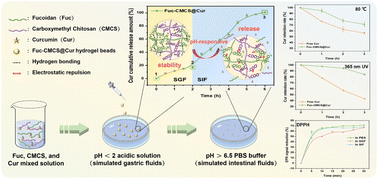
Curcumin (Cur) features versatile bioactivities but suffers from poor stability and high vulnerability to gastrointestinal degradation. To address these bottlenecks, an effective and facile strategy for constructing a sustainable hydrogel delivery system with pH-responsive function and controlled gastrointestinal release properties is reported. The hydrogel beads were developed through physical crosslinking between fucoidan (Fuc), carboxymethyl chitosan (CMCS), and the encapsulated bioactive compound Cur. Structural characterization confirmed that intermolecular hydrogen bonding between Fuc and CMCS played a pivotal role in the hydrogel network formation. Cur was efficiently encapsulated within the hydrogel beads, functioning as an additional crosslinking agent that increased the crosslinking density and reduced the equilibrium water content of the system. Notably, the hydrogel beads protected Cur via non-covalent interactions and physical barriers, enhancing its thermal and UV stabilities. Furthermore, the hydrogel beads exhibited pronounced pH-responsive swelling and release behaviors, showing minimal swelling and limited release under acidic gastric conditions, in contrast to sharp swelling and near-complete release in alkaline intestinal environments, attributed to the pH-dependent protonation states of polysaccharides' functional groups altering intermolecular interactions. Importantly, the encapsulated Cur retained more than 90% antioxidant capacity following simulated gastrointestinal digestion. This crosslinker-free and food-grade system provides a safe delivery platform for labile polyphenols, showing considerable potential in functional foods and dietary supplements.
 Please wait while we load your content...


