


 PLATFORM UPDATE:


From bitter to better: optimizing polyphenol extraction from yellow pea (Pisum sativum L.) using natural deep eutectic solvents (NADES) for improved plant protein products

Abstract
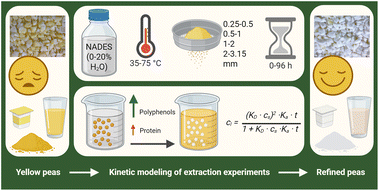
World food systems are shifting toward more sustainable and ethical production, driving demand for plant-based proteins. Yet, consumer acceptance remains limited due to undesirable flavor, color, and texture. Natural deep eutectic solvents (NADES) can be used to sustainably remove bitter and astringent phytochemicals from plants, yielding whitened, odorless, and protein-rich materials. This study examines the selective extraction of polyphenols from yellow split peas (Pisum sativum L.) using two food-grade NADES (betaine or choline chloride with 1,2-propanediol). Kinetic modeling is derived from analytical data from varying pea particle size (fractions of 0.25–0.5, 0.5–1, 1–2, and 2–3.15 mm), temperatures (35, 45, 55, 65, 75 °C) and NADES hydration levels (0, 10, 20% water), revealing how these parameters influence extraction behavior. Comparisons with 1,2-propanediol (0, 10, 20% water) highlight the key role of eutectic solvents' components in determining kinetics and yields. The studied NADES achieve selective polyphenol extraction (around 550 mg kg−1) while retaining proteins (around 8 g kg−1, co-extraction), outperforming conventional ethanol or water as solvents. Increasing NADES hydration enhanced diffusion and extraction rates, demonstrating water's importance as a ternary component in these systems. This work underscores NADES’ potential as an efficient, scalable, and sustainable strategy for purifying plant proteins in a promising step towards improving these products' sensory quality and consumer appeal.
 Please wait while we load your content...


