


 PLATFORM UPDATE:


Sustainable delivery of encapsulated probiotics and their survival in fruit-based beverages and under simulated gastrointestinal conditions
 *a
*a
Abstract
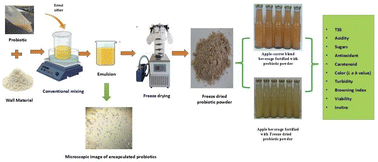
Fruit and vegetable-based beverages are excellent non-dairy carriers for probiotics. However, maintaining probiotic viability in beverages while preserving product quality remains a significant challenge. The present research addressed this gap by evaluating the impact of encapsulation using gum arabic, soy protein, and their combination as wall materials for enhancing probiotic stability in apple and apple-carrot blend beverages. The effect of encapsulated probiotics on the physicochemical and sensory attributes of beverages was investigated. Furthermore, the viability of probiotics in the beverages and under simulated gastrointestinal tract conditions was evaluated. The results revealed that viability of encapsulated probiotics was retained at a level of 8.38 to 9.52 log CFU mL−1 in the beverages and 7.33 to 8.51 log CFU mL−1 in the simulated GIT. Also, the incorporation of encapsulated probiotics did not significantly affect the physicochemical and sensory attributes of the beverages except for colour. The microencapsulated probiotics containing a mixture of gum arabic and soy protein as the wall material provided better protection against low pH environments to probiotics in apple and apple-carrot blend beverages compared to those containing gum arabic and soy protein alone. This study demonstrates that encapsulation using gum arabic and soy protein as wall materials is an effective strategy for improving probiotic viability in fruit and vegetable-based beverages without compromising product quality.
 Please wait while we load your content...


