


 PLATFORM UPDATE:


Microplastic release from food processing to the environment: contamination pathways, health implications, and sustainability perspectives
 d
Aamir Hussain
Dar
*e
and
d
Aamir Hussain
Dar
*e
and
Abstract
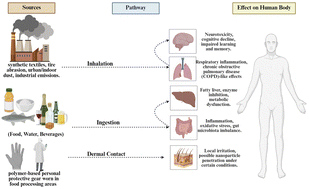
Microplastics have rapidly emerged as a key food safety and environmental concern, however their connection with food processing, packaging and human health have not been supported yet with substantial study reported in the literature. Defined as synthetic polymer particles under 5 mm, MPs originate both from intentional manufacturing and from the degradation of larger plastics. This review provides an updated and interdisciplinary perspective by examining the pathways through which MPs migrate from processing equipment, packaging materials, and storage environments into foods, and how these particles subsequently disperse into terrestrial, aquatic, and atmospheric systems. Human exposure to MPs is discussed, primarily through the ingestion of contaminated foods and beverages alongside inhalation and dermal routes. We further summarize available evidence on the toxicological effects of MPs, including oxidative stress, inflammation, and metabolic disruption, and their potential role as the carriers of hazardous chemicals. Advances in detection methods, such as spectroscopic and chromatographic approaches, are critically evaluated, with an emphasis on the current lack of standardized detection protocols. Finally, the review highlights knowledge gaps, regulatory needs, and innovative mitigation strategies, including sustainable alternatives to plastics. By linking food processing, contamination pathways, health implications, and detection strategies, this review offers a comprehensive outlook designed to inform future research, regulatory frameworks, and industrial practices.
 Please wait while we load your content...


