


 PLATFORM UPDATE:


Alternative proteins from waste streams: a circular economy roadmap for sustainable food systems
 *a
*a
Abstract
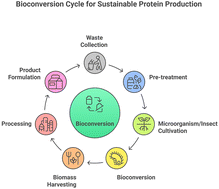
The escalating global demand for sustainable proteins calls for a paradigm shift from conventional animal- and plant-based production toward innovative, resource-efficient alternatives. This review delineates a circular economy roadmap for deriving alternative proteins from agri-food residues, industrial by-products, and organic waste streams. It systematically examines microbial, algal, fungal, and insect-based conversion systems, highlighting their bioprocess efficiencies, nutritional potential, technology readiness, and environmental performance. Emerging technologies such as enzymatic hydrolysis, fermentation biorefineries, and integrated waste-to-protein platforms are discussed as scalable approaches for valorizing waste into high-quality protein for food and feed applications. The study emphasizes that these waste-derived protein systems not only mitigate greenhouse gas emissions, land use, and water consumption but also enhance food security and resource circularity. Key challenges including safety assurance, contaminant control, regulatory barriers, and consumer acceptance, are critically analyzed alongside enabling policy, innovation, and scale-up strategies. By redefining waste as a bioresource, this review advances the vision of a regenerative, low-carbon, and nutritionally secure global food system.
 Please wait while we load your content...


