


 PLATFORM UPDATE:


NADES-based extraction of olive leaf phenolics using RSM, ANFIS and machine learning techniques

Abstract
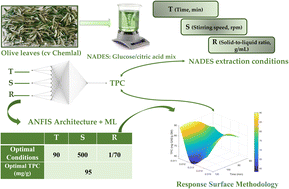
An environmentally friendly technique was developed for recovering total phenolics (TP) from olive leaves (cv. Chemlal) using a natural deep eutectic solvent (NADES) mixture composed of citric acid/glucose (2 : 1). Optimized extraction parameters were validated through an adaptive neuro-fuzzy inference system (ANFIS) and a random forest regressor machine learning (ML) algorithms. The highest TP yield (95.00 ± 1.49 mg g−1 dry matter, DM) was achieved after 90 min of maceration at 500 rpm with a solid/solvent ratio of 1/70 g mL−1. Compared with response surface methodology (RSM), a commonly used conventional optimisation approach, the ML-based models diplayed greater generalization and prediction accuracy. The extraction process was best optimized by XGBoost and ANFIS, with time and solvent ratio identified as the most influential variables. The optimized extract contained 0.52 ± 0.03 mg g−1 DM flavonoids and 6.64 ± 0.30 mg g−1 DM tannins, and displayed strong antioxidant activity with IC50 values of 194.165 µg mL−1 (phosphomolybdate), 3330 µg mL−1 (DPPH), and 9750 µg mL−1 (ABTS). The results demonstrated that the ANFIS model was well aligned with operational data, with a high R2 of 0.9611, along with the lowest RMSE close to 4.4. Moreover, in this study, ANFIS and ML algorithm models represent a unique contribution beyond NADES/RSM studies. Taken together, these findings highlight the optimal extraction conditions and an eco-friendly solvent mixture never before used for TP recovery from olive leaves, supporting the valorization of olive by-products.
 Please wait while we load your content...


