


 PLATFORM UPDATE:


Enhanced techno-functional and bioactive characteristics of dietary fibre from banana pseudostem scutcher through greener technologies
 *a
and
*a
and
Abstract
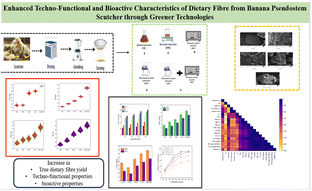
Dietary fibre (DF), an essential nutrient for digestive and metabolic health, is gaining global traction due to its role in preventing lifestyle disorders and its incorporation into functional and sustainable food systems. This study examined the impact of different extraction techniques, namely chemical (CHE), hot water (HWE), microwave-assisted (MAE), ultrasound-assisted (UAE), and dual (UAE + MAE), on the yield and functional properties of dietary fibre (DF) derived from banana pseudostem scutcher. The true extraction yield of DF ranged from 50.54 ± 2.38% (HWE) to 81.67 ± 0.15% (UAE + MAE). The total dietary fibre (TDF) content was highest in UAE + MAE samples, showing nearly 35% higher TDF and 40% higher SDF than HWE, while insoluble dietary fibre (IDF) increased by 30% under UAE. Functionally, UAE + MAE-treated fibres exhibited superior water-holding capacity (6.42 g g−1), oil-holding capacity (4.98 g g−1), and swelling power (5.75 g g−1), indicating 1.8–2.0-fold improvements over CHE method. These enhancements were attributed to increased hydrogen bond exposure, changes in morphology and structure, as confirmed by SEM and FTIR, while XRD revealed reduced crystallinity and increased amorphous regions. The same treatment also improved glucose (81.2 mmol g−1), cholesterol (3.2-fold), and nitrite ion (32.8 mg g−1) adsorption capacities. In summary, ultrasound and dual ultrasound–microwave treatments effectively enhanced yield and techno-functional quality, demonstrating the potential of banana scutcher as a sustainable, high-value dietary fibre source for functional food and nutraceutical industries.
 Please wait while we load your content...


