


 PLATFORM UPDATE:


Valorization of rice straw residue for canthaxanthin production via sustainable bioprocessing

Abstract
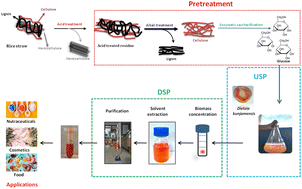
Canthaxanthin is an orange-coloured carotenoid pigment produced by several microorganisms and is known for its anti-cancer, antioxidant, and anti-inflammatory properties. However, canthaxanthin production via chemical routes poses significant health and environmental concerns. In this study, a sustainable process was developed for canthaxanthin production using acid-treated rice straw (ATRS) residue as a substrate. Encapsulation was performed using different wall materials to enable controlled release of canthaxanthin. The highest canthaxanthin yield (135 mg L−1) was achieved from Dietzia kunjamensis after optimization using response surface methodology. Furthermore, ultrasonication enhanced pigment extraction in ethanol by 16.67%, followed by purification using column chromatography. The purified canthaxanthin exhibited an antioxidant activity of 47% in the DPPH assay and showed stability at pH above 2. Among the encapsulating agents tested, polyvinylpyrrolidone showed the highest encapsulation efficiency (75%). Encapsulated canthaxanthin was characterized using FTIR, SEM, and XRD analyses. The Higuchi model provided the best fit for release kinetics from the cyclodextrin–pectin blend matrix (R2 = 0.97). Flowability of the encapsulated powder was evaluated using Carr index, Hausner ratio, and bulk density measurements. Overall, the produced canthaxanthin demonstrates strong potential as a bioactive colorant for applications in the food and nutraceutical sectors.
 Please wait while we load your content...


