


 PLATFORM UPDATE:

Comparative analysis of the effect of ultrasonic treatment with ice and without ice cooling on the stability of oil-in-water emulsions stabilized by fava bean (Vicia fava L.) protein

Abstract
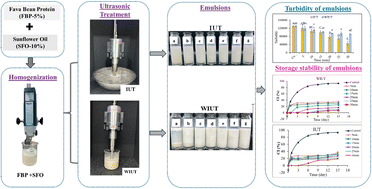
Ultrasonic (US) treatment has attracted significant attention for improving emulsion stability; however, its effects on fava bean protein (FBP)-based emulsions remain underexplored. This study investigates the effect of US-treatment on the stability of oil-in-water emulsions formulated with FBP concentrate. Emulsions were sonicated for 5–30 minutes under two conditions: ice ultrasonic treatment (IUT) and without ice ultrasonic treatment (WIUT). Stability was assessed through physicochemical analysis, including color, ζ-potential, microscopic imaging, FTIR spectroscopy, centrifugal stability, and storage stability. The results showed that US-treatment significantly increased lightness (L*) by 26.57% (IUT) and 26.35% (WIUT) and improved centrifugal stability from 35.60% to 77.52% (IUT) and 82.03% (WIUT) after 30 minutes. Moreover, US-treatment reduced the droplet size and turbidity while enhancing emulsion stability by promoting protein adsorption at the oil–water interface. US-treated samples exhibited significantly higher absolute ζ-potential values than the control. With increasing treatment duration, absolute ζ-potential reached 24.96 mV (IUT) and 28.68 mV (WIUT) after 30 minutes, indicating enhanced emulsion stability. FTIR analysis revealed structural modifications in proteins and stronger protein–oil interactions. Over a 15-day storage period, the US-treated emulsion exhibited improved stability, with WIUT samples performing better than those treated under IUT. Overall, these findings highlight the potential of ultrasonic processing for developing stable emulsions with extended shelf life, applicable to plant protein-based food formulations.
 Please wait while we load your content...


