


 PLATFORM UPDATE:


Pulsed electric field-assisted copigmentation via endogenous phenolic acids enhances the chemical stability of anthocyanins in pomegranate juice

Abstract
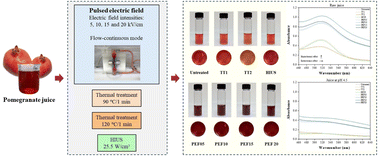
Pomegranate juice is valued for its high content of anthocyanins and phenolic acids, which contribute to its vivid color and antioxidant properties but are sensitive to thermal degradation. This study investigated the impact of pulsed electric field (PEF) treatments at 5, 10, 15, and 20 kV cm−1 in continuous flow on anthocyanin stability, phenolic profile, physicochemical properties, and color of pomegranate juice. High-intensity ultrasound (HIUS) and thermal treatments at 90 °C/1 min and 120 °C/1 min were applied for comparison. PEF treatments preserved most anthocyanins and maintained juice quality, notably inducing electric field-driven copigmentation between anthocyanins and the juice's own phenolic acids, without adding external copigments. This intrinsic copigmentation significantly enhanced color stability and intensity, with the strongest effect observed at 15 kV cm−1. Higher intensity (20 kV cm−1) led to some anthocyanin degradation. Thermal treatment at 90 °C/1 min caused moderate anthocyanin loss (11%), while severe heating at 120 °C/1 min resulted in substantial degradation (up to 52%) and color loss. Despite some losses, thermal processing increased punicalagin content by 16–23%. Overall, PEF emerges as a promising non-thermal alternative for preserving phenolic compounds and stabilizing anthocyanins in pomegranate juice through a novel mechanism of copigmentation that relies on the natural phenolic constituents of the juice itself, without the need for added copigments. This approach opens new opportunities for developing clean-label products with enhanced color stability and functional properties.
 Please wait while we load your content...


