


 PLATFORM UPDATE:


Physicochemical and bioactive characterization of microencapsulated Phyllanthus emblica kombucha powder through foam mat drying
 ab
Norhayati
Muhammad,
*a
Norazlin
Abdullah
a
and
Dayang Norulfairuz
Abang Zaidel
cd
ab
Norhayati
Muhammad,
*a
Norazlin
Abdullah
a
and
Dayang Norulfairuz
Abang Zaidel
cd
Abstract
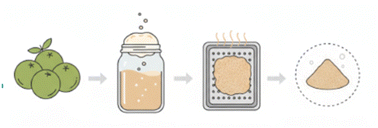
Interest in botanical kombucha enriched with bioactive compounds has expanded, especially those that integrate Phyllanthus emblica. However, its sour taste and astringency limit its acceptability. This study aims to examine the physicochemical and bioactive properties of a microencapsulated foam mat-dried kombucha powder developed from Phyllanthus emblica extract and nipa palm sugar. The liquid kombucha was encapsulated through foam mat drying at 65 °C for 5 hours using orange, pomegranate and P. emblica pomace powder, which were then tested for encapsulation efficiency. Characterization of the quality attributes involved the total phenolic content, 2,2-diphenyl-1-picrylhydrazyl (DPPH) radical scavenging activity, pH, moisture content, total soluble solid, ethanol content, powder properties, proximate analysis and toxicity test. The powdered kombucha encapsulated with P. emblica pomace powder demonstrated the highest encapsulation efficiency of 86.10% with a total phenolic content of 998 ± 35.41 mg GAE per g. It showed a DPPH radical scavenging activity value of 63.62% ± 0.78%, pH of 3.09 ± 0.04, moisture content of 1.67 ± 0.40, and a total soluble solid of 7.80 ± 0.30 (Brix°) and met the halal regulatory limit with an ethanol content of 0.31% ± 0.02%. Proximate analysis revealed 391.10 ± 0.15 kcal/100 g, 96.60 ± 0.01 g carbohydrates, 0.87 ± 0.02 g protein, 0.63 ± 0.00 g fibre, and 0 g fat. A toxicity evaluation using the brine shrimp lethality assay yielded an LC50 of 1043.87 µg mL−1, confirming its nontoxicity. Overall, the foam mat-dried P. emblica kombucha powder demonstrated promising physicochemical stability and bioactivity, underscoring its potential as a safe and value-added ingredient in functional beverages.
 Please wait while we load your content...


