


 PLATFORM UPDATE:

Modified atmosphere packaging of sunflower microgreens (Helianthus annuus) for quality and postharvest shelf-life extension

Abstract
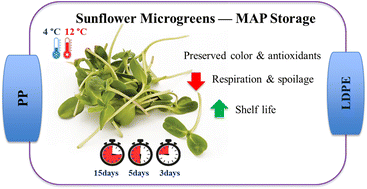
Sunflower microgreens, known for their high nutritional value, attractive colors, and flavors, have a short shelf life at ambient temperatures. In this study, sunflower microgreens were packaged using two types of polymer films—low-density polyethylene (LDPE) and polypropylene (PP)—each tested under two modified atmosphere packaging (MAP) conditions: active and passive. The four packaging treatments were as follows: PE-MP1 (LDPE film with active MAP), PE-MP2 (LDPE film with passive MAP), PP-MP1 (PP film with active MAP), and PP-MP2 (PP film with passive MAP). Control samples were packaged in perforated LDPE bags under ambient air. All samples were stored at 4 °C and 12 °C and evaluated on days 3, 5, and 15 for physical, chemical, and microbial quality. The results showed that sunflower microgreens packaged with PP-MP1 and stored at 4 °C exhibited significantly lower weight loss and higher retention of moisture, chlorophyll, ascorbic acid, phenolic compounds, and antioxidant capacity compared with other treatments (p < 0.05). Moreover, PP-MP1 showed a lower total microbial count and yeast and mold, indicating better preservation of nutritional and microbiological quality. In contrast, PE-MP1 maintained superior visual appearance and reduced odor intensity, suggesting that this packaging provided more favorable sensory characteristics. Taken together, the findings indicate that PP-MP1 provided the best overall physicochemical and microbial stability, whereas PE-MP1 was preferable for maintaining sensory quality during 15 days of refrigerated storage.
- This article is part of the themed collections: Celebrating International Women’s Day 2026: Women in Sustainable Food Technology and 2026 Chinese New Year and Lunar New Year Collection: Food
 Please wait while we load your content...


