


Sustainable recovery of bioactive compounds from coffee silverskin

Abstract
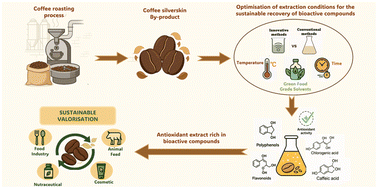
Bioactive compounds play a crucial role in promoting human health and food preservation, driving current research toward their sustainable recovery from agri-food by-products. The aim of this research was the optimization of an eco-friendly extraction methodology of bioactive compounds from coffee silverskin, the only by-product of the coffee roasting process. Looking towards a transition to a circular economy of the food sector, food-grade green solvents (ethanol and water) were used to compare conventional (maceration) and innovative (ultrasound-assisted) extraction techniques and the variables that support the extraction process (time, temperature and solvent ratio). The data suggested that the extraction by maceration favored the best recovery of phenolic compounds, with chlorogenic and caffeic acids among the most representative ones. In particular, maceration with a hydroalcoholic solvent of ethanol/water (30 : 70), carried out for 60 minutes at 60 °C, improved the extraction efficiency of total polyphenols (44.15 mg GAE per g), flavonoids (32.36 mg ECE per g), and chlorogenic (3.34 mg g−1) and caffeic (1.37 mg g−1) acids, which was associated with a high antioxidant activity shown by DPPH (33.62 µM TE per g) and ABTS (98.13 µM TE per g) assays. The obtained results are encouraging for future applications of the coffee silverskin extract as a sustainable antioxidant ingredient across different sectors.
- This article is part of the themed collection: Celebrating International Women’s Day 2026: Women in Sustainable Food Technology
 Please wait while we load your content...


