


 PLATFORM UPDATE:

Development and quality assessment of an antioxidant-rich Rubus squash: evaluation of physicochemical properties, bioactive compounds, and storage stability
 *a
*a
Abstract
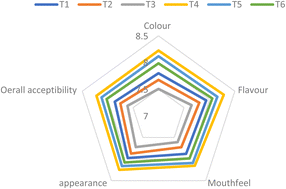
Rubus berries, particularly blackberries, are gaining global attention for their rich nutritional and bioactive value. These berries contain essential nutrients and polyphenols, contributing to their health promoting properties. As interest grows in wild edible species, Rubus fruits offer a promising approach to diversify diets. This study focused on developing a Rubus squash as a ready-to-serve beverage. Six squash samples were analyzed for physicochemical parameters, nutritional components, color parameters (L*, a*, and b* values), bioactive compounds, antioxidant activity, and sensory attributes. Specific bioactive compounds (3,4-DHBA, gallic acid, vanillic acid, rutin, quercetin and cyanidin-3-glucoside) were analyzed using HPLC. During storage, TSS, titratable acidity, total sugars and turbidity increased from 40 to 53.09 °Bx, 1.00 to 1.40%, 31.05 to 44.61%, and 947.16 to 1099.15 NTU, respectively, while, vitamin C, phenols, flavonoids, antioxidant activity and anthocyanins decreased, from 23.75 to 14.75 mg/100 mL, 524.03 to 294.53 mg GAE/100 mL, 223.69 to 124.22 mg QE/100 mL and 83.57 to 69.75 mg/100 mL among the treatments, respectively. The bioactive compounds also showed a decline during the storage period, ranging from 26.64 to 16.02 mg L−1, 90.23 to 59.94 mg L−1, 0.65 to 0.46 mg L−1, 4.15 to 3.03 mg L−1, 90.56 to 64.22 mg L−1 and 13.55 to 10.36 mg L−1, respectively, for 3–4 DHBA, gallic acid, vanillic acid, rutin, quercetin and cyanidin-3-glucoside. However, sensory evaluation remained acceptable throughout the storage period. Treatment T4 showed optimal results with maximum vitamin C (20.28 mg/100 mL), DPPH inhibition (77.98%), anthocyanins (75.31 mg/100 mL), phenols (447.95 mg GAE/100 mL), and flavonoids (193.89 mg QE/100 mL). It also scored the highest in sensory attributes and retained maximum bioactive compounds after 6 months of storage. The findings suggest that Rubus squash could serve as a health-promoting, antioxidant-rich beverage, retaining both its sensory appeal and nutritional benefits over time.
 Please wait while we load your content...


